Bess Atwell
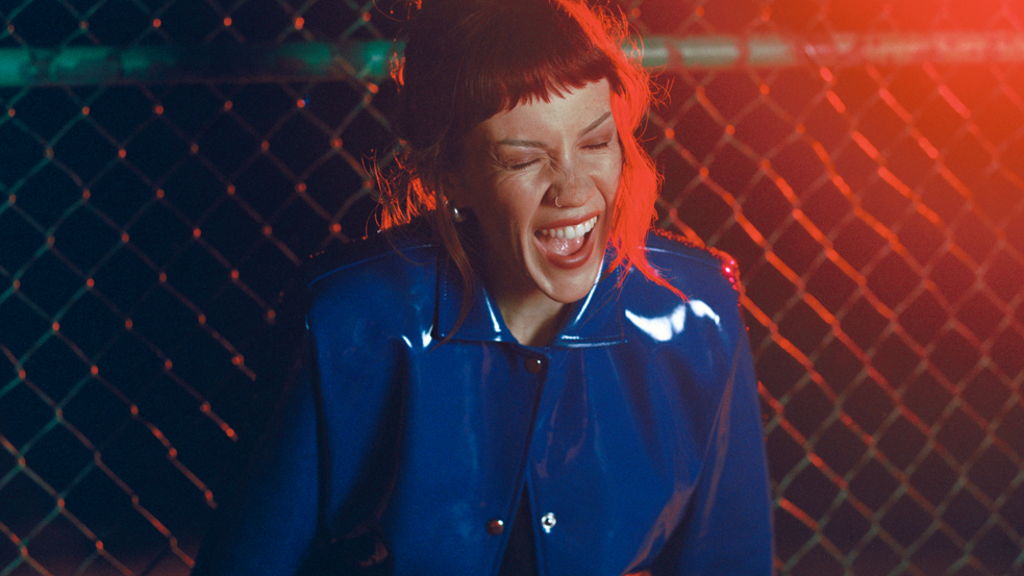
See Bess Atwell in Bristol in April.
On Friday 30 April 2027 at 18:30, catch Bess Atwell live at Electric Bristol on 15 Nelson Street in Bristol.
DHP Presents Bess Atwell Friday 30th April 2027 Electric Bristol Sometimes we have to leave what we know behind, in order to find ourselves. For British artist Bess Atwell, a spontaneous move to Canada – where she lived for nine months – proved the catalyst for one of her most vividly realised, honest albums to date. Cut a Figure, her fourth record, doesn’t just trace the outlines; it digs deep, as Atwell analyses a lifetime’s worth of relationships, decisions and motivations. To make such an album, she had to abandon some of the creative processes that had become second-nature. “The songs I really enjoyed performing from my last record were the rare moments where I put down any instruments, and it was just me singing to my audience, which can be a bit scary,” she says, referring to 2024’s Aaron Dessner-produced Light Sleeper. “But those were the songs that seemed to connect the most, and where I felt most free to actually live with the song and what it was about.” Continuing her streak of working with some of the industry’s most in-demand producers, for Cut a Figure she teamed up with Chris Coady, whose credits include revered albums from Foals, Slowdive, Beach House, Future Islands and Yeah Yeah Yeahs. “He was in the upper echelon of people I wanted to work with, and I’d considered him to be very out of my league as a producer,” Atwell says with a laugh. Yet Coady heard the early demos and loved what he heard, of course, and she joined him at his studio in Glendale, California, for three weeks: “The longest I’ve ever spent in the studio making a record.” Atwell has long been known for the emotional acuity in her songs, tackling complicated subjects such as family strife, heartache and resentment with astonishing sensitivity. On Cut a Figure, though, she turns the magnifying glass on herself, to discover that her own way of dealing with emotions – perhaps most crucially, with anger – has evolved. Take first single ‘The Act’, a brilliantly moody, Eighties-leaning pop track written while Awell was living in Quebec. “I like to joke that this album has ‘diss tracks’ on it, because I’m not someone you’d describe as an angry person, but there’s some of that on this record,” she says. “I think for a long time I didn’t actually know how to express anger, or stand up for myself at all, and a lot of that repressed emotion has come out as extreme anxiety.” Living in Canada and managing an ongoing health challenge, Atwell channelled her feelings into song; words she never got to say to “a lot of people back home”. It was an empowering, cathartic experience, reflected in the song itself: “It feels like saying, ‘I didn’t want to have to do this on my own, but if you want to watch me do that, I will.’” Atwell received critical acclaim for Light Sleeper, which the Observer described in its four-star review as dealing with “all kinds of emotive situations, worked into poignant, dreamlike miniatures”. Her voice, too, has been the subject of near-unanimous praise, with a 2021 review of her second album, Already, Always, in The Independent observing: “[Her] vocals have a crystalline quality... her delivery is swooning, romantic.” Her diaphanous voice is just as spellbinding on Cut a Figure, only now it is perhaps matched by the focus on her songwriting. Opener ‘Two of Wands’ skitters along soft percussion, while Atwell sings in a strange, lopsided cadence: “I watch a thousand pieces of the puzzle come to life/ And I’ll keep my mouth shut but my fingers on the pulse at night.” It questions the things that are supposed to make us feel safe, namely family, and the sometimes-sad reality, before turning to the more comforting truth, of how we can create our own place of sanctuary. Atwell paints a scene in such masterful strokes that it becomes instantly relatable to her audience, while at the same time maintaining a specificity that is quintessentially hers. ‘I Was a Mirror’ is sweetly scathing, a letter to an ex-partner who made it impossible to remain friends. “I always want to see the best in people, and I’m very much a ‘love-over-hate’ kind of person,” she admits. “But actually when I allowed myself to feel honestly about the relationship, I’d been quite angry with him for a while.” On the sombre, stunning ‘Glass’, meanwhile, she addresses the desire to feel truly seen by a partner; the upbeat piano of ‘End in Tears’ provides a bittersweet contrast to the toxic relationship it examines. But the most important relationship Atwell addresses on Cut a Figure is her own. ‘Your Name’ is ostensibly about a toxic dynamic that should have been supportive: “Really it’s about learning to stand up for myself,” she says. “I’m really proud of this song – Chris [Coady] told me this is the one that made him want to work on the record – because it’s what I’m expressing on a lot of the record, of struggling with being angry, and reclaiming my voice when I felt like it had been lost.” We hear it on the slow, waltzing ‘Out for Eleven’, inspired by Atwell’s experiences with panic attacks and agoraphobia, as well as the misconceptions surrounding both. “I think a lot of people believe panic attacks are something you grow out of, so for a long time I had these feelings of shame that really damaged my self-esteem.” She reclaims it all on ‘Tonight I Am Allowed’, enveloped by looping textures of piano, analogue synths and shimmering drum patterns. “I’m tired of acting,” she sings, “Like it’s gone wrong when maybe/ This is just how they made me/ And I become what I was.” Atwell’s voice is as beautiful as ever, but there’s a palpable defiance in the way she sings here, as though she’s physically pushing back against the masks society has forced her to wear for most of her life: “This is just the way I am.” It’s a powerful phrase, and one that echoes throughout this extraordinary record.
Genre: Music, Pop
